my dear friends

My brother Leslie once came back from Brazil with a gift for me. A cassette tape. Remember these relics of another age? Remember that flimsy brown strip of magnetic tape that would melt in the summer, snap in the winter and unravel when in a bad mood? To save our music, we learned the now obsolete skill of repairing broken tapes. We became experts in the art of splicing, of rolling pencils in the tape wheel, of using paper clips to smooth the wrinkles caused by the snags…Let no one tell you otherwise: no surgeon coming out of medical school had a more precise and delicate touch than a music lover repairing a cassette tape. Of course, none of this is of any importance today as no one listens to cassettes anymore, and no one needs them repaired. All these precious moments spent… I should have learned Japanese instead. Of course, ever the romantic, when I took a language course in college, I chose Russian because I wanted to read Maiakovski’s poems in the original. (After a couple of semesters and an inseparable dictionary -memento kept as sign of my folly- I managed to decipher PRAVDA’s subtitles and to write my name before I gave up that pursuit.) But forgive my rambling. The brazilian cassette? It was by Chico Buarque, a singer I had never heard of before. Although I have visited Brazil several times, Eu Não Falo Português.. Oh, as a fluent Spanish speaker, I get along fine in an idiom I invented, a bizarre mélange of both (but isn’t language a living entity ever evolving, ever changing? No?) So, although I didn’t speak Portuguese, I loved the music and I loved his voice. Chico Buarque sang about people struggling, street kids, prostitutes, about love in times of trouble, about censorship. .. which brings me back to that cassette tape, as one of my favorite Buarque songs is Meu caro amigo (My dear friend).

 My dear friend, please forgive me, if I can’t pay you a visit, but since I found someone to carry a message, I’m sending you news on this tape. Here we play soccer, there’s lots of samba, lots of choro and rock’n’roll. Some days it rains, some days it’s sunny but I want to tell you that things here are pretty dark. Here, we’re wheeling and dealing for survival, and we’re only surviving because we’re stubborn. And everyone’s drinking because without cachaça, nobody survives this squeeze.
My dear friend, I don’t want to bother you or make you homesick, but I can’t avoid telling you the news. Here, we’re hustling and dealing for our daily bread with spite and a bad taste in our mouths. And everybody’s smoking, because without a smoke, nobody survives this squeeze.
My dear friend, I wanted to call you, but the price of a call is nothing to laugh about. I’m distressed because I want you to know what’s going on. Here, there’s pushing and shoving and we have to swallow so many lies. And everybody’s loving, because without a little loving, nobody survives this squeeze.
My dear friend, I really wanted to write to you but the mail is a risky thing. But if this goes past them (the government), I’ll try to send fresh news on this tape… Marieta (Buarque’s wife) sends a kiss for you, a kiss for the family, for Cecilia, for the kids; Francisco (Buarque himself) also sends his regards. All the best and Goodbye…
-BACK.jpg) So, there I was looking through some boxes this evening and I found all these cassettes, and among them was my Chico Buarque tape. I no longer have a cassette player and I can’t verify this but the last time I played this, it was hissing and would sometimes get stuck right in the last part of the song. It brought back so many memories and I thought I’d give you the gift my brother gave me 20 years ago. So for you, my dear friends, meus caros amigos, here’s
So, there I was looking through some boxes this evening and I found all these cassettes, and among them was my Chico Buarque tape. I no longer have a cassette player and I can’t verify this but the last time I played this, it was hissing and would sometimes get stuck right in the last part of the song. It brought back so many memories and I thought I’d give you the gift my brother gave me 20 years ago. So for you, my dear friends, meus caros amigos, here’s May you enjoy him as much as I did:
http://www.youtube.com/watch?v=WPEPj3wpSb0
Other favorite Buarque songs:
Construção
Apesar de você
Calice
Funeral de um lavrador
 Francisco Buarque de Hollanda
(born June 19, 1944 in Rio de Janeiro) is a Brazilian poet, singer, musician, songwriter and novelist who become famous for his music which comments on Brazil’s social, economic and cultural situation. His latest book, Budapeste, achieved great critical acclaim and won the Prêmio Jabuti, a brazilian award similar to The Booker Prize Award.

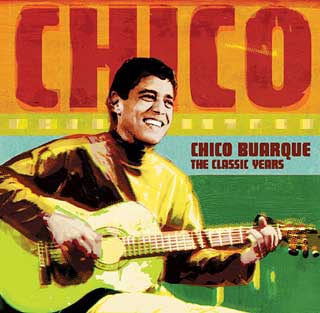 ‘Music kind of kidnapped me’ he says. Starting out composing songs in the Sixties, he went on to write hundreds of them. His gift as a social commentator was to inhabit the lives of Brazil’s disenfranchised. ‘Construcao’, a surrealist fantasy about a construction worker falling to his death became a popular classic, enamouring him to a public struggling with political repression under military rule. Exile is a recurrent theme in Buarque’s life and work. Buarque himself was jailed briefly and went into exile in Italy and France. He learnt the importance of words at a time when words were banned. Forced to submit his songs to government censors, nearly two-thirds of his material was rejected. “It was a challenge,” he says. ” I had to write 20 songs in order to get 2 past the censors.”
 Playing ‘futebol’ with Bob Marley. Soccer is his earliest and most enduring passion. “I started playing soccer when I was four years old, and I still play every week.”
 Meu caro amigo:
L’une des chansons les plus connues de Chico Buarque. Une lettre en forme de chanson adressée à Augusto Boal, exilé à ce moment-là.
Mon cher ami tu m’excuses s’il te plait
Se eu não lhe faço uma visita
Si je ne te rends pas visite
Mas como agora apareceu um portador
Mais comme maintenant vient d’apparaître un messager
Mando notícias nessa fita
Je t’envoie des nouvelles sur cette cassette
Aqui na terra ’tão jogando futebol
Ici au pays on joue au football
Tem muito samba, muito choro e rock’n’ roll
Il y a beaucoup de samba beaucoup de choro et de rock’n’roll
Uns dias chove, noutros dias bate sol
Des jours il pleut, d’autres le soleil cogne
Mas o que eu quero é lhe dizer que a coisa aqui ’tá preta
Mais ce que je veux dire c’est que les choses ici vont mal
Muita mutreta pra levar a situação
Beaucoup de combines pour supporter la situation
Que a gente vai levando de teimoso e de pirraça
Qu’on supporte avec obstination et malice
E a gente vai tomando, que também, sem a cachaça
Et qu’on boit beaucoup, aussi, parce que sans la cachaça
Ninguém segura esse rojão
Personne ne supporte cette galère
Meu caro amigo eu não pretendo provocar
Mon cher ami je ne prétend pas provoquer
Nem atiçar suas saudades
Ni ranimer ta nostalgie
Mas acontece que não posso me furtar
Mais il se trouve que je ne peux me soustraire
A lhe contar as novidades
A te raconter les nouveautés
Aqui na terra ’tão jogando futebol
Ici au pays on joue au football
Tem muito samba, muito choro e rock’n’ roll
Il y a beaucoup de samba beaucoup de choro et de rock’n’roll
Uns dias chove, noutros dias bate sol
Des jours il pleut, d’autres le soleil cogne
Mas o que eu quero é lhe dizer que a coisa aqui ’tá preta
Mais ce que je veux dire c’est que les choses ici vont mal
É pirueta pra cavar o ganha-pão
Faire des pirouettes pour arracher son gagne-pain
Que a gente vai cavando só de birra, só de sarro
Qu’on arrache de têtu, de capricieux
E a gente vai fumando que, também, sem um cigarro
Et qu’on fume, aussi, parce que sans la cigarette
Ninguém segura esse rojão
Personne ne supporte cette galère
Meu caro amigo eu quis até telefonar
Mon cher ami j’ai même voulu téléphoner
Mas a tarifa não tem graça
Mais le coût n’a rien d’amusant
Eu ando aflito pra fazer você ficar
J’ai une envie folle de te mettre
A par de tudo que se passa
Au courant de ce qui se passe
Aqui na terra ’tão jogando futebol
Ici au pays on joue au football
Tem muito samba, muito choro e rock’n’ roll
Il y a beaucoup de samba, beaucoup de choro et rock’n’roll
Uns dias chove, noutros dias bate sol
Des jours il pleut, d’autres le soleil cogne
Mas o que eu quero é lhe dizer que a coisa aqui ’tá preta
Mais ce que je veux dire c’est que les choses ici vont mal
Muita careta pra engolir a transação
Des tas de grimaces pour avaler tous ces trucs
E a gente tá engolindo cada sapo no caminho
Et qu’on avale des couleuvres en chemin
E a gente vai se amando que, também, sem um carinho
Et qu’on s’aime, aussi, parce que sans la tendresse
Ninguém segura esse rojão
Personne ne supporte cette galère
Meu caro amigo eu bem queria lhe escrever
Mon cher ami j’ai bien voulu t’écrire
Mas o correio andou arisco
Mais on se fait difficile à la Poste
Se me permitem, vou tentar lhe remeter
Si on me le permet je vais te remettre
Notícias frescas nesse fita
Des nouvelles fraîches sur cette cassette
Aqui na terra ’tão jogando futebol
Ici au pays on joue au football
Tem muito samba, muito choro e rock’n’ roll
Il y a beaucoup de samba, beaucoup de choro et rock’n’roll
Uns dias chove, noutros dias bate sol
Des jours il pleut, d’autres le soleil cogne
Mas o que eu quero é lhe dizer que a coisa aqui ’tá preta
Mais ce que je veux dire c’est que les choses ici vont mal
A Marieta manda um beijo para os seus
Marieta envoie un bisou aux tiens
Um beijo na família, na Cecília e nas crianças
Un bisou à la famille, à Cécile et aux enfants
O Francis aproveita pra também mandar lembranças
Francis en profite pour également se rappeler à ton bon souvenir
A todo o pessoal
A tout le monde
Adeus
Au revoir
(Traduction de Dominique et Vagner du Forum Bossa-Nova)
Ernest Barteldes
Jemima Hunt
Archives
 jmc strategies
- Primer on the Anti-Immigrant Forces Determined to Hijack American Politics
- Immigration: Waiting for Godot Need Not Be Policy
- Baby Doc is Dead, Duvalierism Lives On
- Human Rights in Haiti in the Manigat Era
- Dealing With Statelessness in the Dominican Republic
- Haiti: It Started with a Bang…
- The Duvalier Case: What Is at Stake at the Court of Appeals
- Another day of reckoning for Jean Claude Duvalier?
- Will Duvalier’s Victims Have Their Day in Court?
- Will Duvalier Regain Access to Illicit Funds Pilfered from the Haitian Treasury?
 Michèle Voltaire Marcelin is a poet/writer, performer and painter who was born and raised in Haiti, sojourned in Chile, and currently lives in the United States. The publication of her first novel “La Désenchantée” (CIDIHCA, Montréal-2006) was followed by its Spanish translation “La Desencantada” and two other books of poetry and prose: “Lost and Found” and “Amours et Bagatelles” (CIDIHCA, Montréal-2009) - translated into Spanish by Editorial ALBA as "Amores y cosas sin importancia" - all of which garnered rave reviews. Her writings are also featured in 3 anthologies published in France: "Cahier Haiti" (published by RAL'M-2009), "Terre de Femmes" (Editions Bruno Doucey-2011) "Revue Intranqu'îllités" (2012). She speaks and writes fluently French, English, Spanish and Haitian Creole. She has a BFA from the Leonard Davis Center for the Performing Arts at CUNY and a Masters from The New School for Social Research.
Leave a Reply